Emergency Response
Smell Gas at Home? Do This Immediately (Riverside, CA)
By Riverside Plumbing Pros·January 28, 20265 min read
A gas smell is never something to 'wait and see' on. Here's the safe sequence — and why the repair is a job for a licensed pro.
Natural gas is odorless on its own, so utilities add that distinctive rotten-egg or sulfur smell precisely so you'll notice a leak. If you smell it in your home, treat it as an emergency and act in the right order — safety first, repair second.
Leave the building first
Get everyone — people and pets — out of the house and into fresh air. Don't stop to investigate or gather belongings. Gas can accumulate quickly, and your first job is to be somewhere safe.
Don't create any spark
This is the critical rule. Do not flip light switches, unplug anything, use your phone inside, start a car in an attached garage, or light a match. Any of those can ignite accumulated gas. Leave lights however they are and simply exit.
Call 911 or your gas utility from outside
Once you're safely away from the building, call 911 or your gas company's emergency line. They can shut off the gas at the meter and confirm the area is safe. This comes before calling a plumber — the immediate danger has to be handled first.
Then call a licensed plumber to find and fix the leak
After the emergency is controlled, a licensed contractor locates and repairs the leak. Gas piping falls under the California C-36 plumbing classification, so this is genuinely licensed work — not a handyman job. We pressure-test the system to pinpoint exactly where it's losing gas, isolate the section, repair it with proper materials, and re-test to confirm the line holds before it's put back in service.
Signs of a gas problem beyond the smell
- A hissing sound near a gas appliance, line, or the meter
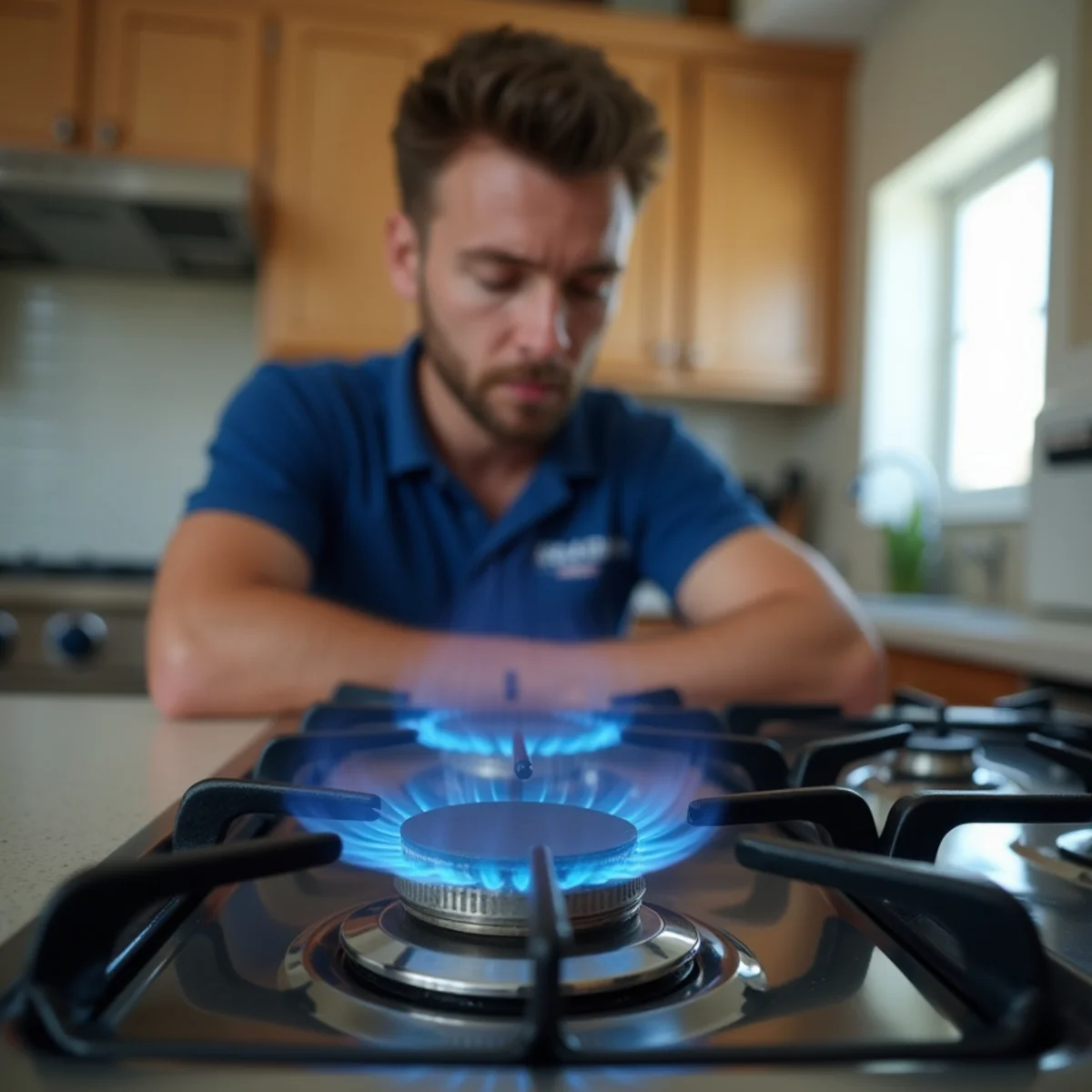
- A pilot light or burner that won't stay lit, or burns orange instead of blue
- Dead or discolored vegetation over a buried gas line
- A higher-than-normal gas bill with no change in usage
- Physical symptoms like headaches or dizziness that improve when you leave the house
New gas lines are licensed work too
The same licensing applies when you're adding a gas line for a new stove, dryer, pool heater, fire pit, or outdoor kitchen. Proper sizing for the appliance's demand, correct materials, a permit, and a pressure test are what make the connection safe and code-compliant. It's worth doing right the first time.
Written by the licensed team at Riverside Plumbing Pros. Call (831) 290-4327 for help with any of the issues below.
From our licensed plumbers
How gas leaks are found and repaired safely
Once the utility has made the area safe, finding the leak is methodical, not a matter of sniffing around. We isolate the system and put it under a calibrated pressure test, watching the gauge for any drop that reveals the line is losing gas. That tells us whether the leak is at a fitting, along a run, or at an appliance connection, so the repair is targeted and then re-verified under pressure before the gas is ever turned back on. Gas piping falls under the California C-36 classification precisely because guesswork here is dangerous.
The most common culprits we find aren't dramatic ruptures — they're corroded fittings, a connector that was over-tightened years ago, or a flex line at a stove or dryer that has fatigued. New appliance runs are their own category: a line sized for a cooktop won't safely feed a pool heater or a tankless water heater, so proper sizing for the appliance's BTU demand is as much a part of safe gas work as the leak repair itself.
Frequently asked questions
The gas utility or 911 first, from outside the building. They can shut off gas at the meter and confirm safety. Once the immediate danger is handled, call a licensed plumber to locate and repair the leak.
No. Any electrical spark can ignite accumulated gas, so don't flip switches, unplug anything, or use your phone inside. Leave the building first, then call 911 or the gas utility from outside.
A healthy gas flame burns steady and blue. A yellow or orange flame, soot around the burner, or a pilot that won't stay lit signals incomplete combustion and deserves a professional look — sometimes alongside a carbon-monoxide check.