Hard Water
Tree Roots & Old Sewer Lines in Historic Redlands
By Riverside Plumbing Pros·April 22, 20266 min read
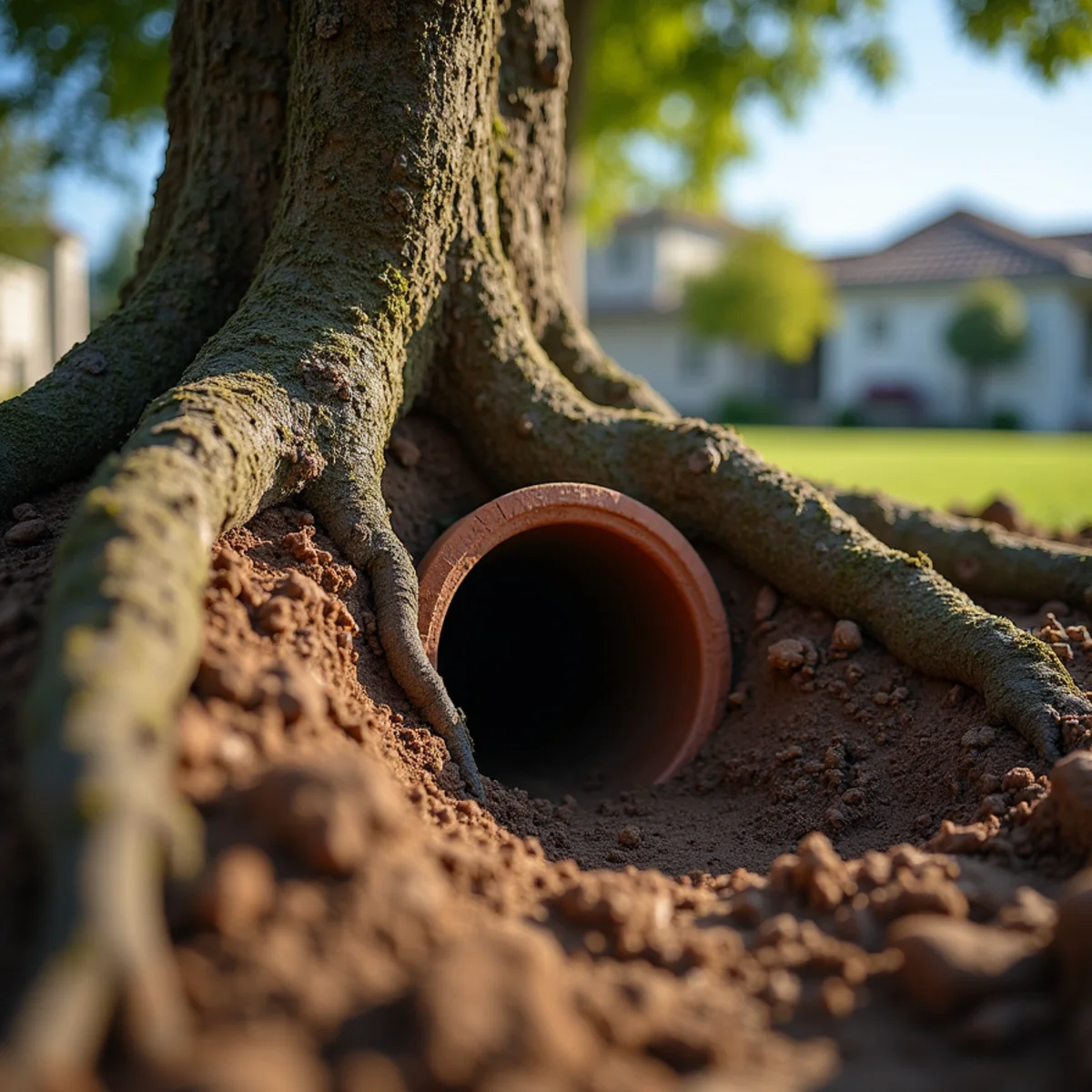
Those beautiful old trees are the number-one enemy of historic Redlands sewers. Here's why — and how the problem is finally solved.
Redlands is one of the Inland Empire's most beautiful cities, full of historic homes shaded by mature trees on tree-lined streets. But those same trees are the leading cause of sewer trouble in older neighborhoods — a classic case of the thing that makes a place lovely also making it a plumbing challenge. Here's the dynamic, and how it's permanently resolved.
Why roots invade sewer lines
Tree roots are relentless in their search for water and nutrients, and a sewer line is a rich source of both. Older Redlands homes were plumbed with clay or early cast-iron sewer laterals whose joints and, eventually, cracks let tiny amounts of moisture and vapor escape. Roots sense that, grow toward it, and work their way in through the smallest opening. Once inside, they flourish in the nutrient-rich environment and grow into a dense mesh that snags everything flowing past.
The tell-tale signs
- Recurring main-line clogs that come back within weeks or months
- Multiple drains gurgling or backing up together
- Sewer odor from drains or the yard cleanout
- Slow drains throughout the house, not just one fixture
- Backups that worsen over time despite repeated cabling
Why cabling alone doesn't solve it
A cable (snake) with a cutting head can clear roots temporarily, chewing through the mesh to restore flow. But it leaves the root structure in the pipe and the entry point wide open, so the roots simply grow back — often within months. If you're cabling the same line every season, you're renting a fix, not buying one. The roots will keep coming until the pipe is sealed against them.
The permanent fixes
The real solution starts with a camera inspection to see exactly where the roots are entering and how much damage they've done. From there, the options are:
- 1Hydro jetting to scour the roots out completely — far more thorough than cabling — followed by a sealing repair.
- 2Trenchless pipe lining, which cures a new seamless pipe inside the old one, sealing every joint and crack so roots have no way in.
- 3Spot repair or trenchless replacement of a badly damaged section, when lining isn't appropriate.
Protecting a historic home in the process
Historic Redlands homes deserve care, and that extends to their yards and mature landscaping. Trenchless methods are especially valuable here because they seal or replace the line with minimal digging — you keep your trees and your yard intact while permanently solving the root problem. We camera the line, show you the footage, and recommend the least invasive option that actually ends the backups.
Written by the licensed team at Riverside Plumbing Pros. Call (831) 290-4327 for help with any of the issues below.
From our licensed plumbers
Sealing roots out for good, not just cutting them back
Cabling a root-invaded line with a cutting head restores flow, but it's the plumbing equivalent of mowing weeds — the roots regrow through the same opening, often within a season, because the crack or joint that let them in is still there. That's the cycle so many older Redlands homeowners get stuck in. Breaking it means sealing the pipe against re-entry, which is why we recommend camera-confirming the intrusion point and then either lining the pipe or repairing the damaged section rather than scheduling another annual cabling.
Trenchless lining is especially valuable on heritage properties, and not just for the pipe. A cured-in-place liner forms a seamless new pipe inside the old one, sealing every joint and crack so roots have nothing to exploit — and it does it through small access points instead of trenching across a mature, tree-lined yard. You keep the trees that make Redlands what it is, and the sewer finally stops backing up.
Frequently asked questions
Sealing the pipe is the only permanent fix. After a camera inspection, we jet out the roots and either line the pipe (curing a seamless new pipe inside the old one) or repair the damaged section, so roots have no entry point.
In older Redlands-area homes it's usually tree roots regrowing through cracks in a clay or cast-iron lateral. Cabling only clears them temporarily; sealing or lining the pipe ends the cycle.
Usually not. Sealing the pipe — with a liner or a spot repair — removes the water source and entry point the roots were exploiting, so the tree can stay. Removal is a last resort for a tree whose roots repeatedly compromise a line that can't be lined.